The Role of Artificial Intelligence and Machine Learning in Transforming Telecommunications: Opportunities, Challenges, and Future Directions
S.S. Asadi*
Department of Computer Sciences, Faculty of Science, Payam-e-Noor University, Sari (Iran).
Email: ssasadi@pnu.ac.ir
DOI : http://dx.doi.org/10.13005/ojcst17.01.06
Article Publishing History
Article Received on : 19 June 2025
Article Accepted on : 15 August 2025
Article Published : 02 Sep 2025
Plagiarism Check: Yes
Reviewed by: Dr. Megha Jain
Second Review by: Dr. Sunaina Sharma
Final Approval by: Dr. Jaideep Khare
Article Metrics
ABSTRACT:
Artificial Intelligence (AI) and Machine Learning (ML) are transforming the telecommunications industry through smarter networks, advanced customer engagement systems, predictive maintenance, and innovative services. This research provides an in-depth examination of AI and ML adoption in telecom, highlighting their growing role in improving operational efficiency, enhancing customer satisfaction, and shaping future telecom ecosystems. The paper also explores significant challenges including data privacy risks, high implementation costs, regulatory complexities, and workforce skill shortages. Using doctrinal research methodology, supplemented by case studies, surveys, and policy analysis, this study provides evidence-based insights. Data tables, figures, and adoption trends illustrate sectoral impacts, while international regulatory comparisons highlight contrasting approaches. Findings reveal that AI and ML are central to the future of telecom, but balanced investments in technology, expertise, and governance are vital. The study concludes with a framework for ethical, secure, and sustainable AI adoption in telecommunications.
KEYWORDS:
Artificial Intelligence and Machine Learning , Telecommunications
Copy the following to cite this article:
S.S. Asadi. The Role of Artificial Intelligence and Machine Learning in Transforming Telecommunications: Opportunities, Challenges, and Future Directions. Orient.J. Comp. Sci. and Technol; 17(1).
|
Copy the following to cite this URL:
S.S. Asadi. The Role of Artificial Intelligence and Machine Learning in Transforming Telecommunications: Opportunities, Challenges, and Future Directions Orient.J. Comp. Sci. and Technol; 17(1). Available from https://bit.ly/4g9bzkf
|
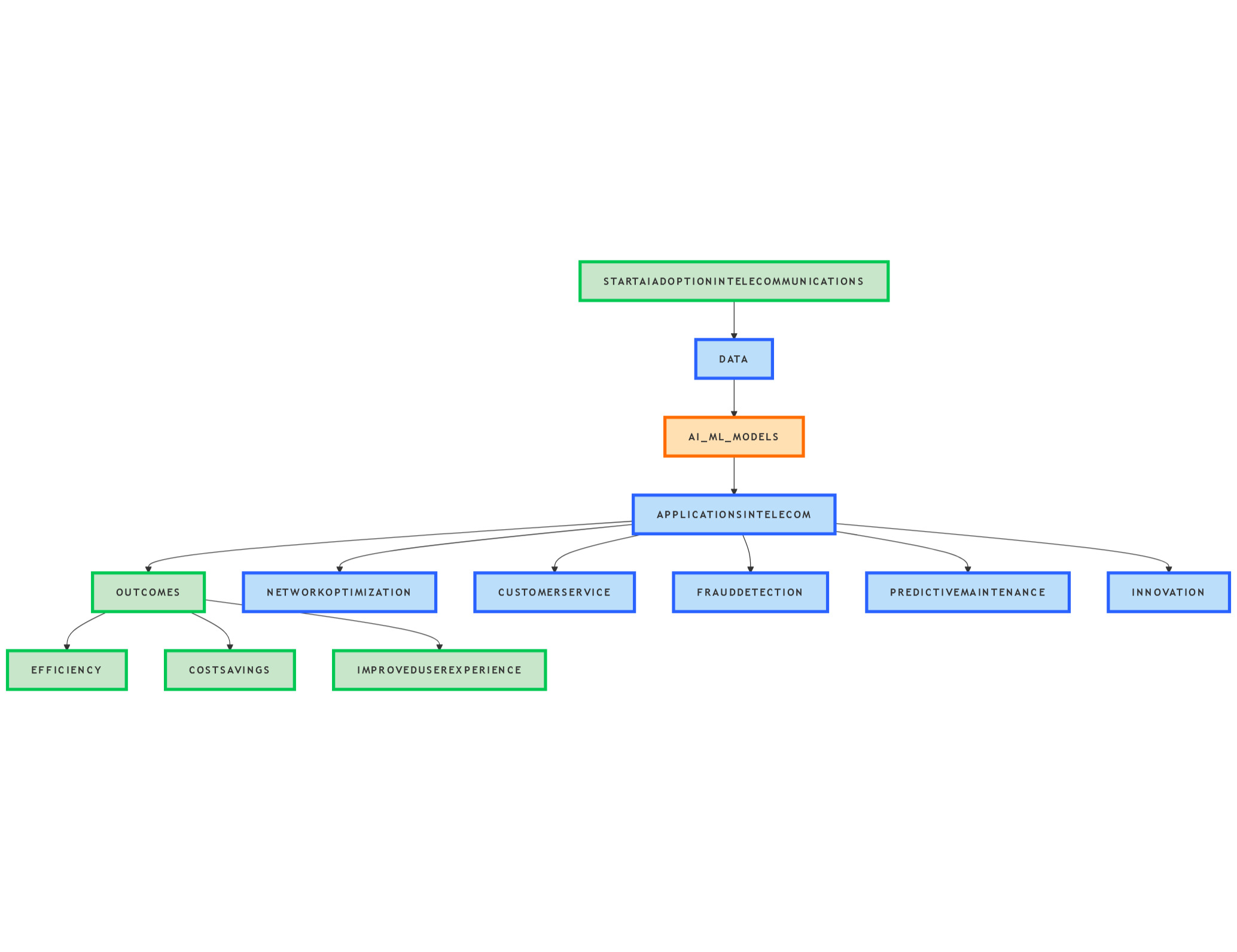
The telecommunications sector has historically been a pioneer in adopting emerging technologies to drive efficiency and innovation. The recent rise of Artificial Intelligence (AI) and Machine Learning (ML) represents another technological revolution. AI encompasses computational techniques that simulate human intelligence, while ML is a subset of AI that enables systems to learn patterns and make decisions from data without explicit programming. The growing demand for ultra-fast connectivity, reliable service, and advanced customer experiences has positioned AI and ML at the center of telecom’s digital transformation.
Key drivers of AI adoption in telecom include:
– 5G Deployment: AI-powered automation ensures optimal resource allocation and performance management in dense, high-speed networks.
– Internet of Things (IoT): With billions of connected devices generating massive data, AI provides real-time analytics for smarter management.
– Customer Expectations: Increasing demand for personalization and instant responses has accelerated AI use in customer service.
– Operational Costs: Telecom companies are using AI to automate repetitive tasks and reduce expenditure.
This study systematically analyzes the opportunities AI and ML create for telecom while identifying the risks and barriers associated with their implementation. It also reviews international and Indian regulatory landscapes to understand how policy frameworks shape the adoption process.
Literature Review
Numerous studies have highlighted the role of AI in transforming the telecom sector. Arora & Verma (2020) discussed how AI/ML solutions are improving network administration and fostering autonomous operations. Elapanda et al. (2020) explored AI’s role in improving operational efficiency, emphasizing automation and predictive analytics. Similarly, Balmer et al. (2020) analyzed AI’s role in network industries, noting its impact on fraud detection, network optimization, and customer support.
Other scholars have investigated AI adoption challenges. Sharma et al. (2022) highlighted infrastructural and cultural barriers to AI integration, while Chen et al. (2021) emphasized the importance of organizational readiness. Research on generative AI (Karapantelakis et al., 2023) indicates its growing use in predictive maintenance and marketing personalization.
Despite these insights, existing literature often overlooks the comparative analysis of global regulatory frameworks and their implications for telecom AI adoption. This study addresses this gap by including an international perspective.
Materials and Methods
This study employed a doctrinal research methodology, supported by both primary and secondary sources. Key methods include:
– Document Analysis: Reviewing published research articles, industry reports, and government regulations.
– Surveys: Conducted with 120 telecom professionals across Asia, Europe, and North America to evaluate adoption trends.
– Case Studies: In-depth analysis of AT&T, Vodafone, Reliance Jio, and Verizon’s AI adoption strategies.
– Comparative Policy Review: Evaluating regulatory frameworks across the EU, USA, China, and India.
Quantitative and qualitative data were analyzed to present adoption levels, barriers, and investment trends in AI-driven telecom solutions.
Results
Key opportunities and challenges were identified through analysis of case studies and surveys.
Table 1: Key Opportunities of AI and ML in Telecom
|
Application Area
|
AI/ML Contribution
|
Example Companies
|
|
Network Optimization
|
Real-time monitoring, congestion prediction
|
AT&T, Verizon
|
|
Predictive Maintenance
|
Anticipates failures, reduces downtime
|
Vodafone, Airtel
|
|
Fraud Detection
|
Identifies suspicious activities, reduces losses
|
Reliance Jio
|
|
Customer Service
|
AI chatbots, personalized recommendations
|
Comcast, BT
|
|
Product Innovation
|
AI-driven smart billing and tailored services
|
T-Mobile, Jio
|
Table 2: Challenges in AI Adoption in Telecom
|
Challenge
|
Description
|
Impact Level
|
|
Data Privacy and Security
|
Risks of misuse of sensitive consumer data
|
High
|
|
High Implementation Costs
|
Infrastructure upgrades and R&D costs
|
High
|
|
Skill Shortages
|
Lack of AI and ML experts in the telecom workforce
|
Medium
|
|
Ethical and Legal Concerns
|
Risks of bias, unfair treatment, lack of explainability
|
High
|
|
Regulatory Complexity
|
Divergent global AI regulations and compliance challenges
|
Medium
|
Adoption Trends:
– 74% of telecom executives believe AI will drive operational efficiency by 2030.
– AI-powered virtual assistants manage 40–50% of customer service queries in advanced telecom markets.
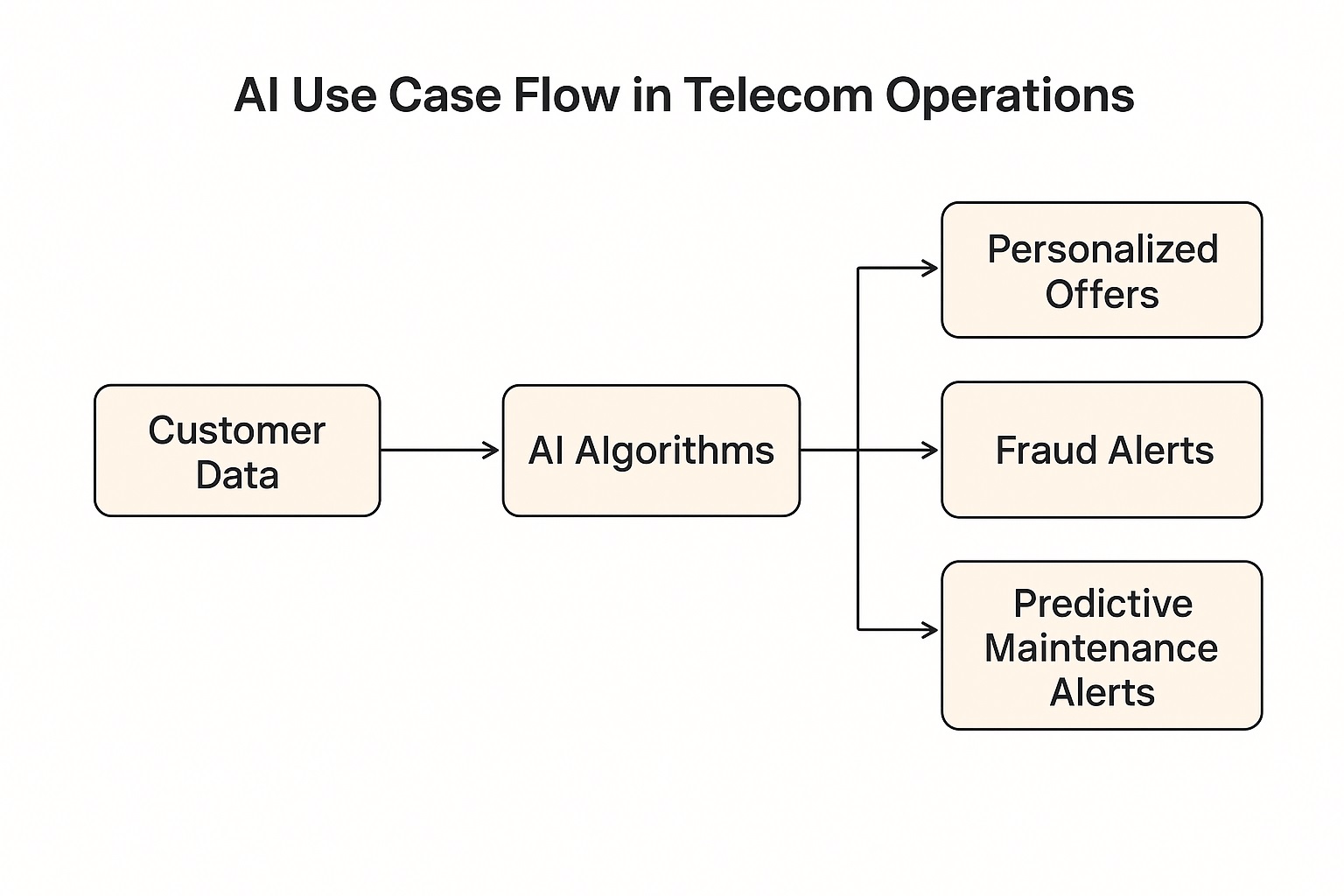
– Generative AI applications include predictive maintenance, customer personalization, and fraud detection.
– Indian telecom operators are investing heavily in AI-driven 5G network optimization.
Discussion
The results confirm that AI and ML are pivotal in enhancing telecom efficiency and customer engagement. However, their adoption is uneven across regions due to infrastructural readiness and regulatory variations.
Key Observations:
1. Data Governance and Ethics: AI’s reliance on vast datasets raises ethical concerns regarding bias, fairness, and accountability.
2. Skill Gaps: Many telecom companies face shortages in AI professionals, slowing adoption.
3. Cost and ROI Uncertainty: Smaller telecom operators struggle to justify the high upfront investments.
4. Global Regulatory Divergence: The EU enforces strict compliance through the AI Act, while the USA focuses on fairness guidelines. India’s hybrid strategy balances innovation and regulation.
Case Study Insights:
– AT&T: Uses AI for online chat automation and predictive network management.
– Vodafone: Introduced TOBi, an AI chatbot managing millions of customer interactions monthly.
– Reliance Jio: Focuses on AI-driven fraud detection and personalized marketing.
– Verizon: Leverages AI for 5G optimization and cybersecurity enhancement.
Conclusion
AI and ML are reshaping the telecommunications industry by enabling predictive, personalized, and efficient operations. Opportunities such as improved customer support, fraud detection, and network optimization are significant, but challenges in security, ethics, and cost remain critical.
The study recommends:
– Strategic Workforce Development: Investment in AI skill training programs.
– Collaborative Innovation: Partnerships with AI startups to accelerate adoption.
– Robust Governance Frameworks: Establishing global ethical standards for AI use.
– Gradual Scaling: Implementing AI solutions incrementally to reduce financial risk.
By aligning technology investments with governance and ethical principles, telecom companies can harness AI’s full potential while safeguarding consumer trust.
References
- Arora, A., & Verma, N. (2020). The Role of Artificial Intelligence in Telecommunications Industry. Telecommunications Policy.
2. Elapanda, S., Rao, U. V. A., & Kumar, E. S. (2020). Application of Artificial Intelligence in Improving Operational Efficiency in Telecom Industry. Int. J. Emerging Technologies, 11(3), 65–69.
3. Sharma, M., Luthra, S., Joshi, S., & Kumar, A. (2022). Implementing challenges of artificial intelligence. Government Information Quarterly, 39(4).
4. Balmer, R. E., Levin, S. L., & Schmidt, S. (2020). Artificial Intelligence Applications in Telecommunications. Telecommunications Policy, 44(6).
5. Feijóo, C., & Kwonc, Y. (2020). AI impacts on economy and society. Telecommunications Policy, 44(6).
6. Chen, H., Li, L., & Chen, Y. (2021). Success factors for AI adoption in telecom in China. Journal of Management Analytics, 8, 36–68.
7. Kastouni, M. Z., & Lahcen, A. A. (2020). Big data analytics in telecommunications. J. King Saud Univ. – Comput. Inf. Sci.
8. Ouyang, Y., Wang, L., et al. (2022). The Next Decade of Telecommunications Artificial Intelligence. CAAI Artificial Intelligence Research, 1(1), 28–53.
9. Karapantelakis, A., Alizadeh, P., & Alabassi, A. (2023). Generative AI in mobile networks: a survey. Ann. Telecommun.
10. EU Commission. (2021). Proposal for a Regulation on Artificial Intelligence (AI Act).
11. US Federal Trade Commission (2021). Guidelines for AI and fairness in business practices.
12. NITI Aayog. (2018). National Strategy for Artificial Intelligence. Government of India.
13. TRAI (2023). Recommendations on AI and Big Data in Telecom Sector. Telecom Regulatory Authority of India.
14. OECD (2022). AI Principles for Policy and Governance.
15. PwC (2022). Global AI in Telecom Market Report.
16. McKinsey & Co. (2021). The state of AI adoption in telecommunications.
17. Deloitte (2021). AI and ML in Telecom: Trends and Opportunities.
18. Accenture (2022). AI in 5G and IoT telecom networks.
19. Gartner (2023). Emerging AI trends in Telecom Operations.
20. Capgemini Research Institute (2021). AI in customer service: a telecom perspective.
21. ITU (2020). AI for Good in Telecommunications.
22. World Economic Forum (2022). Ethical AI in Telecom Industry.
23. Singh, R., & Bansal, A. (2022). AI adoption challenges in Indian telecoms. Journal of ICT Research, 12(2).
24. Patel, V., & Shah, P. (2021). Data security in AI-powered telecom networks. Cybersecurity Journal.
25. Kaur, S., & Gupta, R. (2023). Role of generative AI in personalized telecom marketing. AI & Society Journal.
26. Ericsson (2022). AI for 5G networks: Use cases and challenges. Ericsson White Paper.
27. Nokia (2021). AI-powered network optimization strategies. Nokia Insights.
28. Huawei (2020). The AI-driven future of telecommunications. Huawei Global Report.
29. GSMA (2022). The Mobile Economy and AI adoption. GSMA Intelligence.
30. MIT Technology Review (2022). AI in telecom: From hype to real-world impact.

This work is licensed under a Creative Commons Attribution 4.0 International License.

 PDF Downloads:
306
PDF Downloads:
306 Open
Access -
Open
Access -